AC-U of T startup converts organic waste into high-value bioproducts
Backed by the Acceleration Consortium, SymBL Innovations uses AI-designed microbiomes to develop palm kernel oil alternative

A University of Toronto startup is working on a gutsy solution to convert organic waste into useful chemicals and fuels, engineering microbiomes to create more sustainable bioproducts while generating a potential new revenue stream for waste producers.
Supported by the Acceleration Consortium (AC), SymBL (symbiosis biolabs) Innovations has developed technology that turns waste from compost bins and dairy processing plants into a palm kernel oil alternative for applications across industries, including agriculture, pharmaceutical and personal care.
“Organic waste is most often converted into natural gas or compost, which provide little to no economic returns,” says founder Christopher Lawson, an assistant professor in the Department of Chemical Engineering and Applied Chemistry at U of T. “A bioproduct like a palm kernel oil alternative could turn a sunken cost into profit and be better for the environment.”
Palm kernel oil is an ingredient in countless consumer products. According to a 2026 report by the United Nations Conference on Trade and Development, palm oil is the world’s most in-demand vegetable oil. But its production, concentrated in Indonesia and Malaysia, is linked to issues such as deforestation, habitat loss for orangutans and other animals and significant greenhouse gas emissions.
While most people may associate microbiome with the human gut and health and wellness products, SymBL Innovations has commercialized research that advances the application of designer microbiome for waste upcycling.
“In traditional industrial biotechnology research, the focus is on a single microbe. We’re taking a different approach by harnessing a team of microbes,” says co-founder Ethan Agena, a U of T graduate student. “Each has its own specialization, and our method genetically modifies and assembles them together to create the functionality we need to make these new bioproducts and biomaterials.”
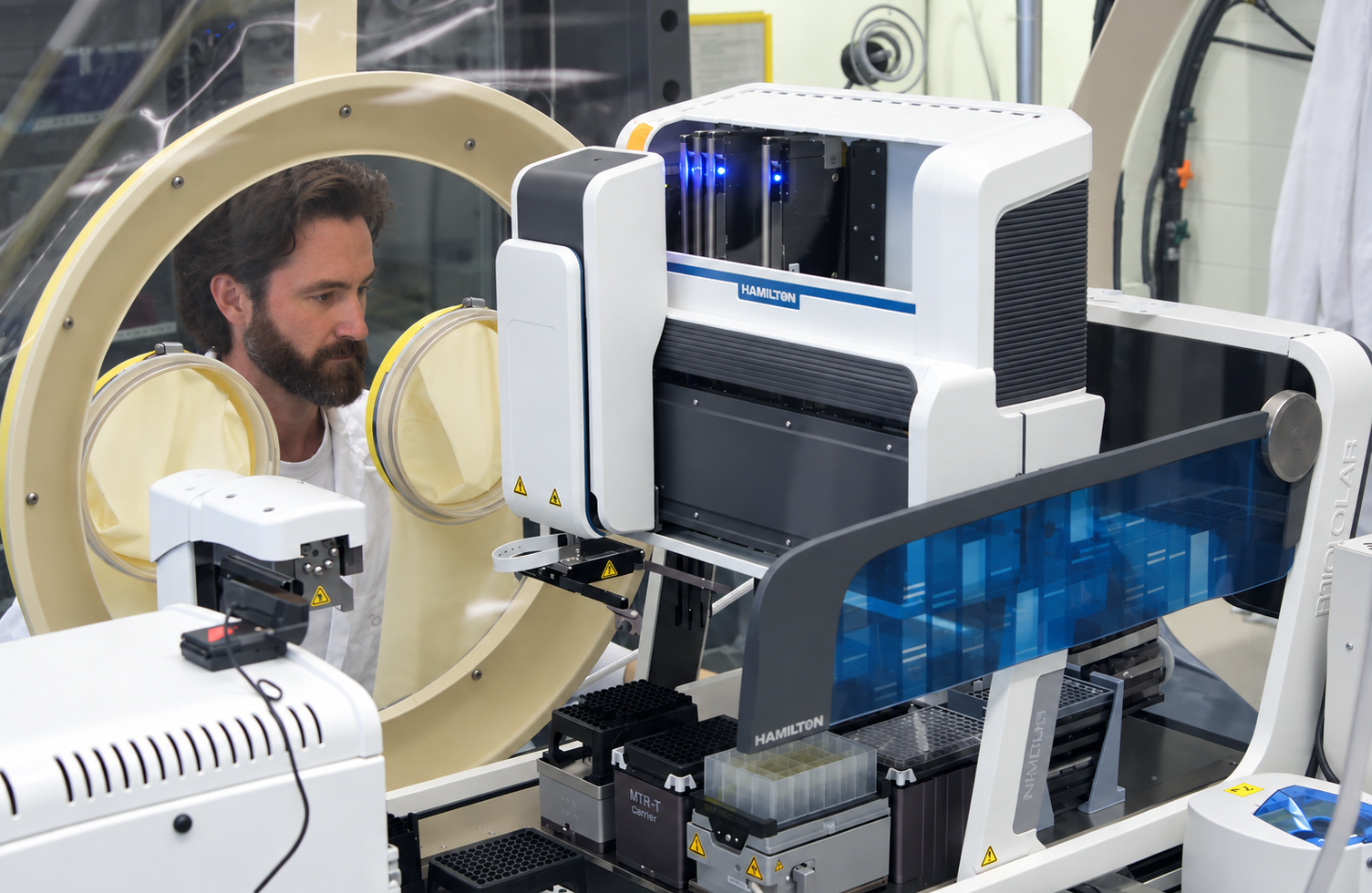
The startup used its self-driving lab to identify and test the best combination of microorganisms for breaking down organic waste and producing the essential ingredients (medium-chain fatty acids) used to make the palm kernel oil alternative.
The lab’s commercialization efforts were supported by the AC, a major U of T research initiative focused on accelerated discovery. The AC awarded Lawson and his team an Accelerate Moonshot Grant, a high-risk, high-reward grant of $350,000 supporting the development and use of SDLs.
Lawson founded SymBL Innovations alongside Agena and two other graduate students - Joel Howard and Connor Bowers – from the Microbiome Engineering Laboratory, which Lawson leads at U of T.
The researchers say they are in discussions with a large multinational corporation about a potential partnership involving their technology, in addition to working with dairy processing plants that can provide the waste for conversion.
SymBL Innovations is also in talks with major municipalities that operate organic waste processing facilities. The startup says municipalities have indicated interest in deploying the technology if they can demonstrate scalability.
“Cities spends millions of dollars a year on waste management and most of it ends up in landfills,” says Lawson. “With our technology, a municipalities waste processing facilities could help produce a palm kernel oil alternative for the global market, generating city revenue to cover operating costs or to fund more public services.”
SymBL Innovations plans to ramp up investor outreach this fall and raise its first pre-seed and seed rounds of investment over the next year. Learn more about the startup here: https://symbl.bio/
Thumbnail image: Photo credit: SymBL Innovations Inc.